Untangling a Platform That Was
Making a Hard Problem Harder
Berkeley Lights (acquired by Bruker) • 2021 - 2023
The Situation
Berkeley Lights' Beacon was one of the most powerful drug discovery platforms in the world, and operating it required real expertise.
The software suite that accompanied the Beacon, however, didn't reflect that reality. Features had been added without consideration for how they affected existing workflows. Constructs and terminology were inconsistent, sometimes within the same piece of software, and there was no coherent design voice across the suite.
The result was a barrage of complaints from scientists at customer organizations and the field support teams who worked alongside them; Berkeley Lights' software was adding friction to an environment that was already demanding enough without it.
The company was well aware of this problem, but they didn't have an owner for it. I was brought in as the first design hire with a mandate to untangle it.
If the instrument could be controlled by another software, I would jump ship, and I know that many of our customers would too.
Manager, Field Support at Berkeley Lights
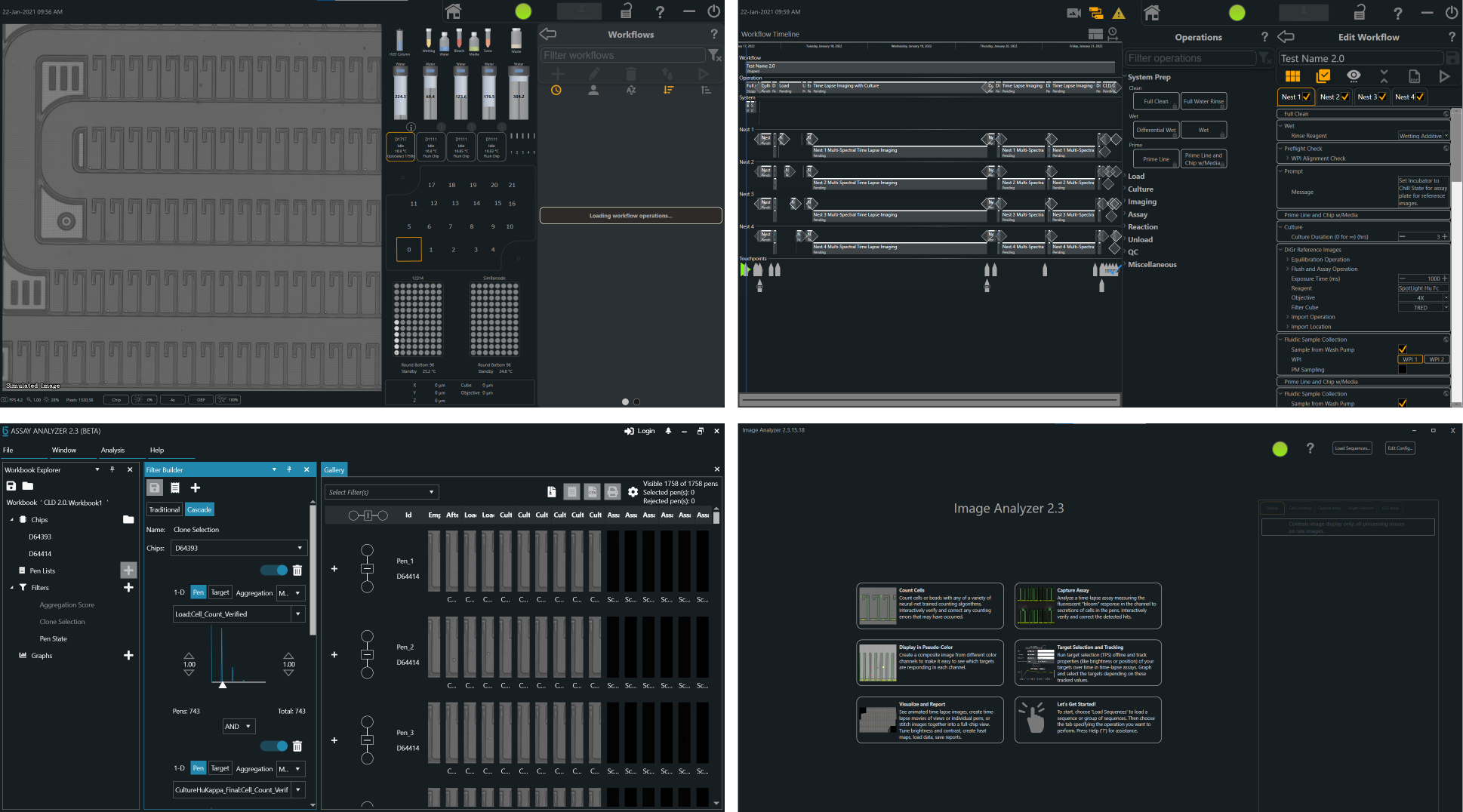
Screenshots of Berkeley Lights' applications - Cell Analysis suite, Assay Analyzer, and Image Analyzer - at the time of my joining.
The Work
In my two years at Berkeley Lights, I built and scaled a design organization from zero, establishing strong foundations across every dimension of the practice: a globally distributed team of five designers, design principles, a multi-year UX roadmap, and a design system that became the foundation for every subsequent product decision. I also ran the team's research practice directly, staying close to the work through journey mapping and usability testing with working scientists, to validate the redesign before it shipped.
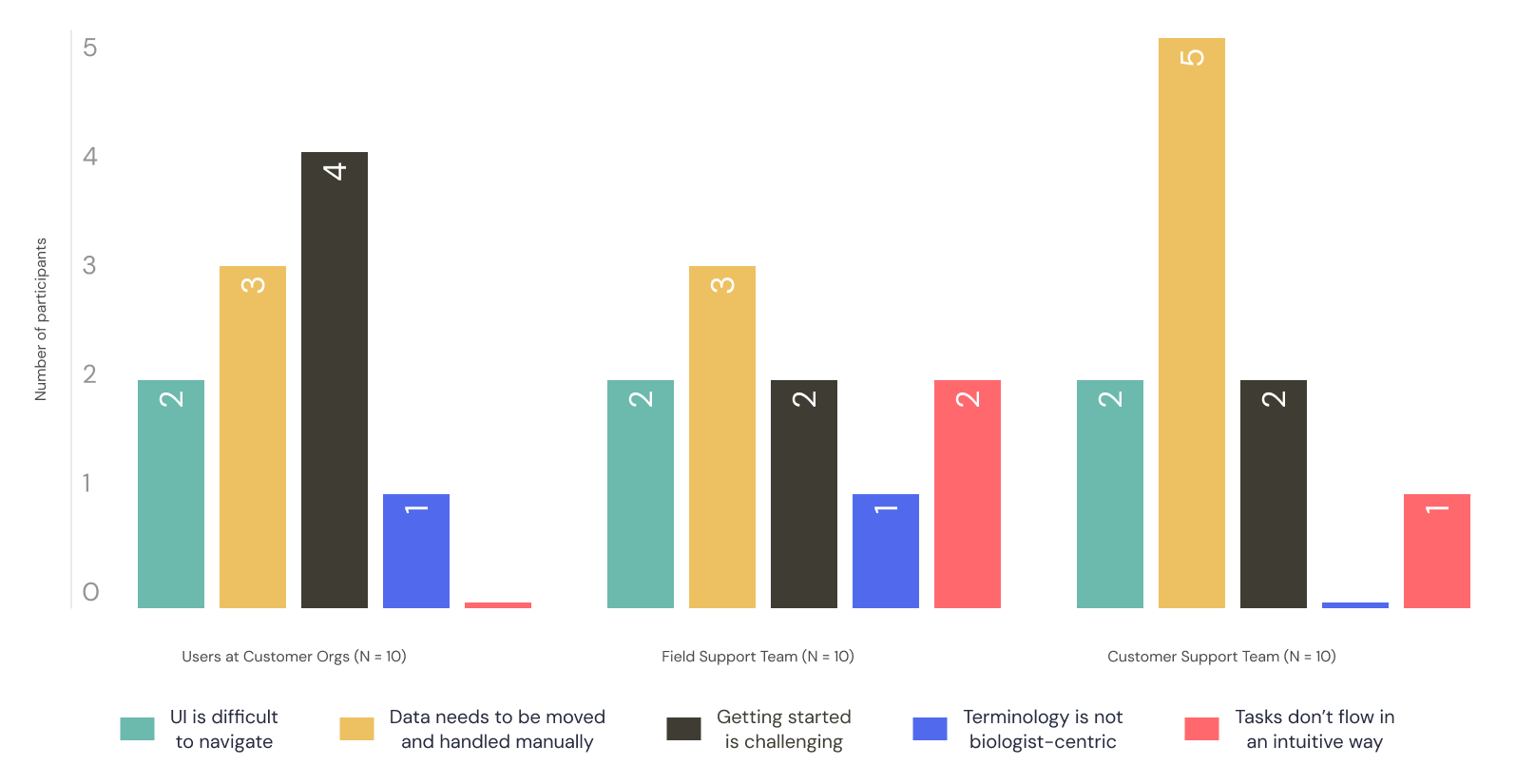
Top issue with the Platform's UX according to three groups of partipants
I established a monthly UX steering committee with executive sponsorship from leaders including the CTO, CPO, VP of Customer Success, and VP of Program Management, creating the first sustained, cross-functional mechanism for design quality at the leadership level. I also partnered with the VP of Product on roadmap prioritization and resource planning, and forged a relationship with the Sales team to connect UX outcomes to revenue conversations.
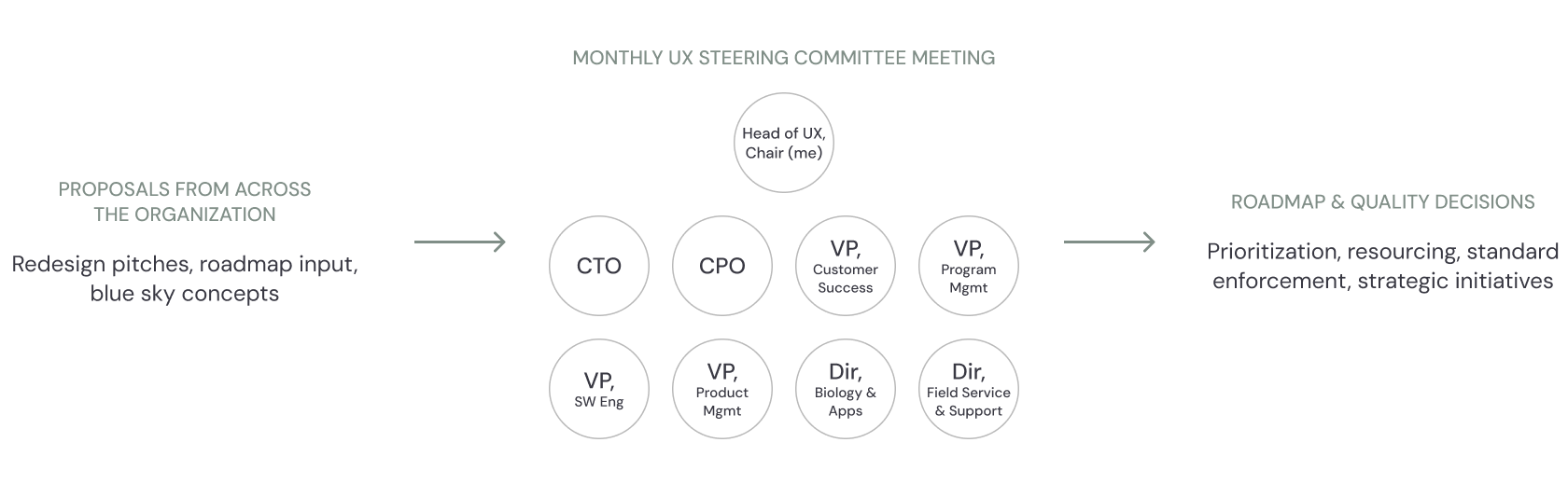
UX steering committee structure
With that foundation in place, the platform overhaul itself centered on bringing every application under a single design system and a consistent navigation architecture, so a scientist moving between tools encountered the same terminology, the same interaction patterns, and the same visual language throughout. I set the direction and the standards, a unified information architecture, shared components, one design language, and the team built the overhaul against that framework, so every subsequent feature had somewhere consistent to build on.
Separately, I identified the opportunity to productize a new bioinformatics pipeline Berkeley Lights had built using machine learning and AlphaFold to analyze antibody properties, and led the design of PrimeSeq, the tool that made it usable. The challenge for molecular biologists was picking the right candidate out of many options, weighing phenotype, genotype, manufacturability, and stability together, rather than in isolation. PrimeSeq organized those competing signals into a single view, so biologists could compare candidates with confidence.
The Outcome
We took a staged approach to improving the platform, starting with a unified design system and consistent navigation architecture across all applications. The platform UX overhaul launched in alpha across 8 customer accounts in late 2022. Platform NPS moved from -10 to +35. Support ticket volume dropped 67%. The Tech Support team directly attributed the reduction to UX improvements that made the platform more navigable without removing the depth and power expert scientists needed. Customer feedback described the experience as "a much smoother experience that feels more intuitive and less cumbersome."
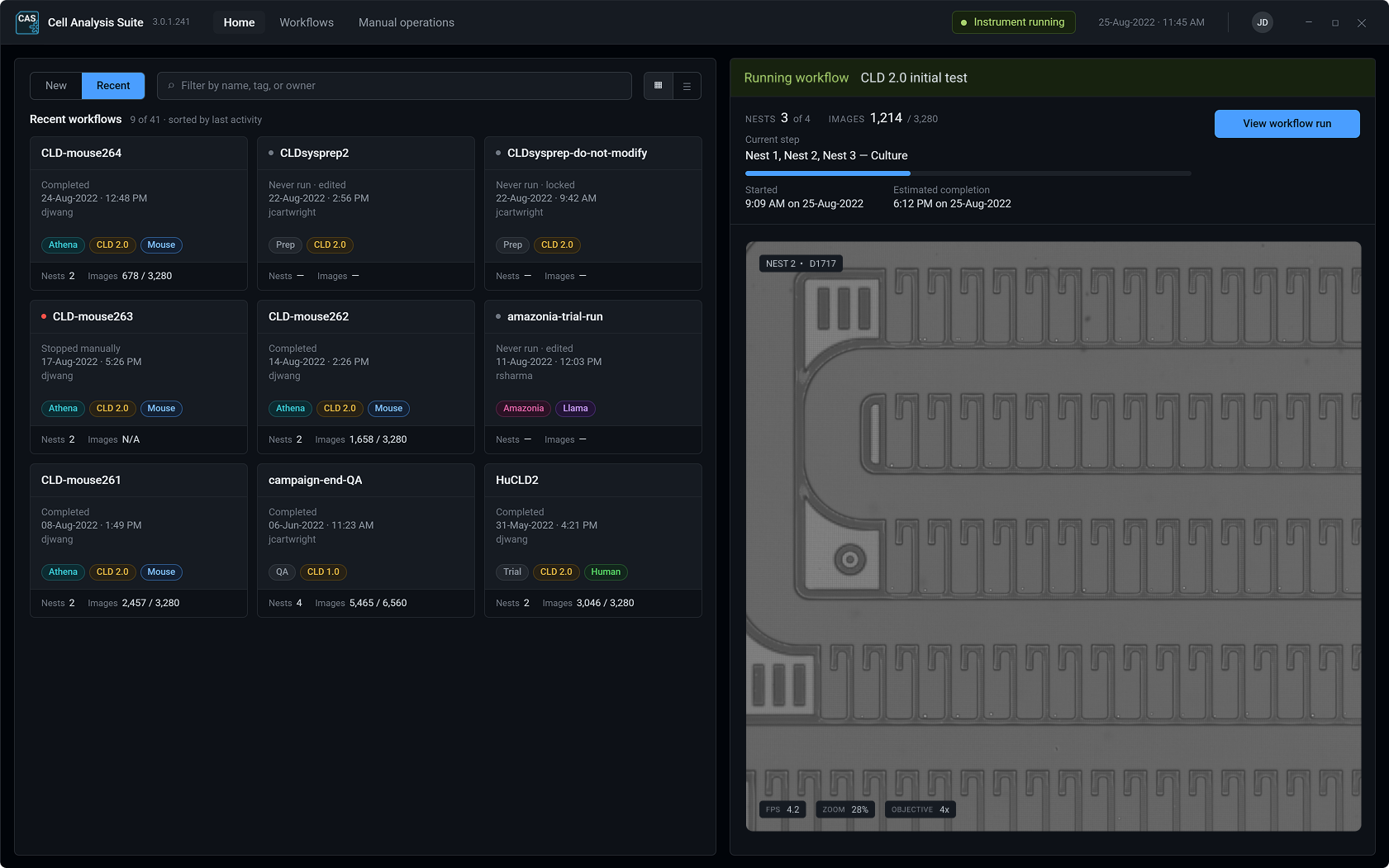
Home screen in the updated Cell Analysis Suite
PrimeSeq brought in four new customers, including La Jolla Institute and Medical College of Wisconsin, institutions that hadn't worked with Berkeley Lights before. The biweekly internal demos and monthly customer demos we ran throughout its development became a model other teams adopted for validating new product ideas before committing engineering time to them.
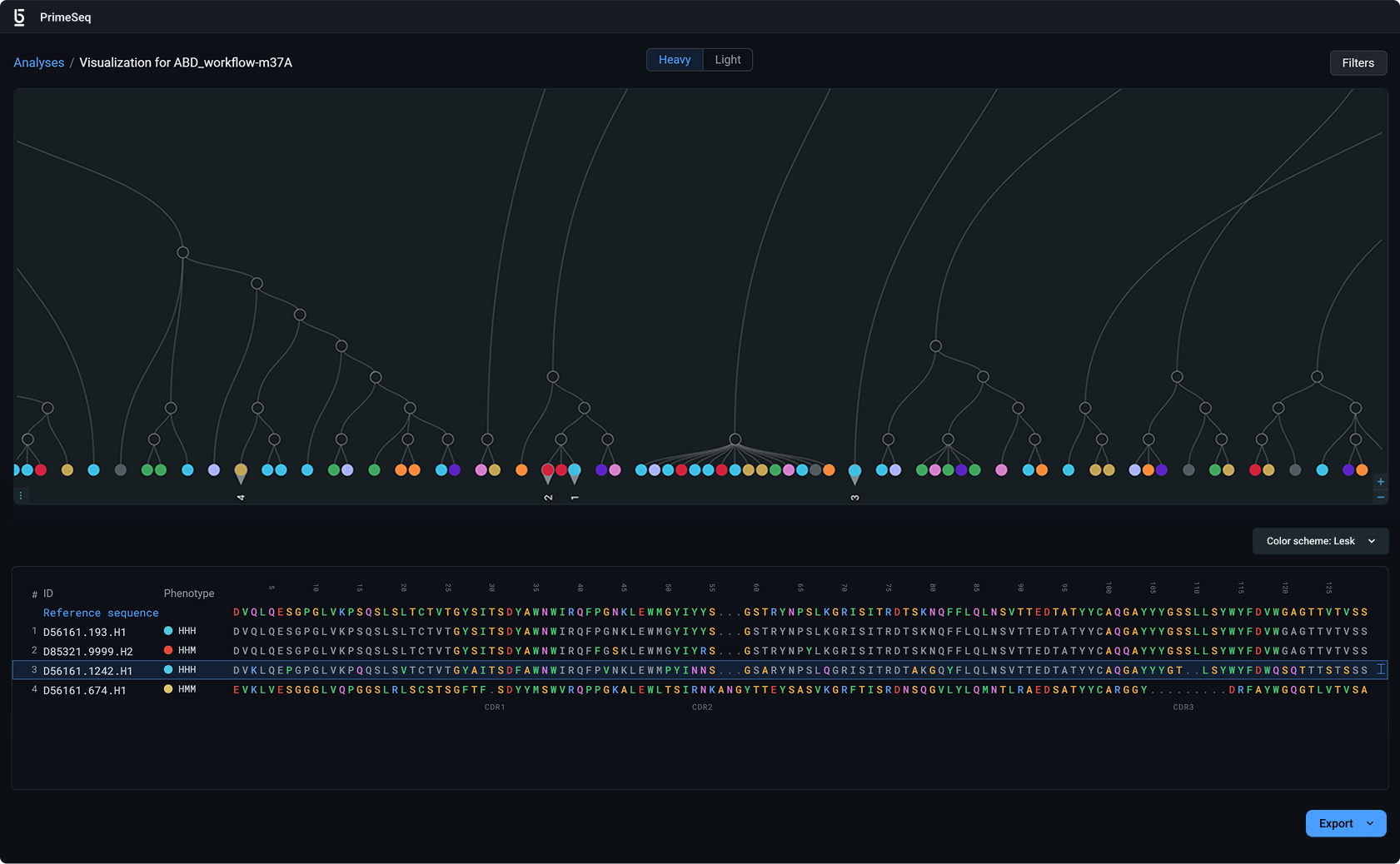
PrimeSeq's dendogram visualization
I also partnered with executive leadership to design and launch a subscription-based monetization model for analysis modules, expanding design's influence from product experience into business model innovation.